

DEEP CUTS
Ceramics is among the oldest ways of materialising human experience. From the first shards of fired clay to the intricately decorated vessels that have carried myths, memories, scents, and ashes across millennia, clay has served as an extension of the body. In the work of Karim Boumjimar (b. 1998), this ancient medium acquires a striking immediacy. Emerging as if conjured from a Dionysian trance, his works evoke ecstatic, ritualised, and sensual energies – a bodily drive to shape the world until it is supple enough to accommodate humanity in all its multiplicities.
Through his exploration of hybridisation, co-evolution, and the solidarities between bodies and ecosystems, Boumjimar depicts queer individuals and their narratives in a practice that spans performance, drawing, and sculptural ceramics. His materials reflect the viscosity and fluidity of the body, and his figures, feminine, masculine, and animalistic, appear raw, unguarded, and unapologetic. They are at once bound and vulnerable, caught in a chaotic dance of power and submission, with ephemeral gestures rendered as lasting visual stories.
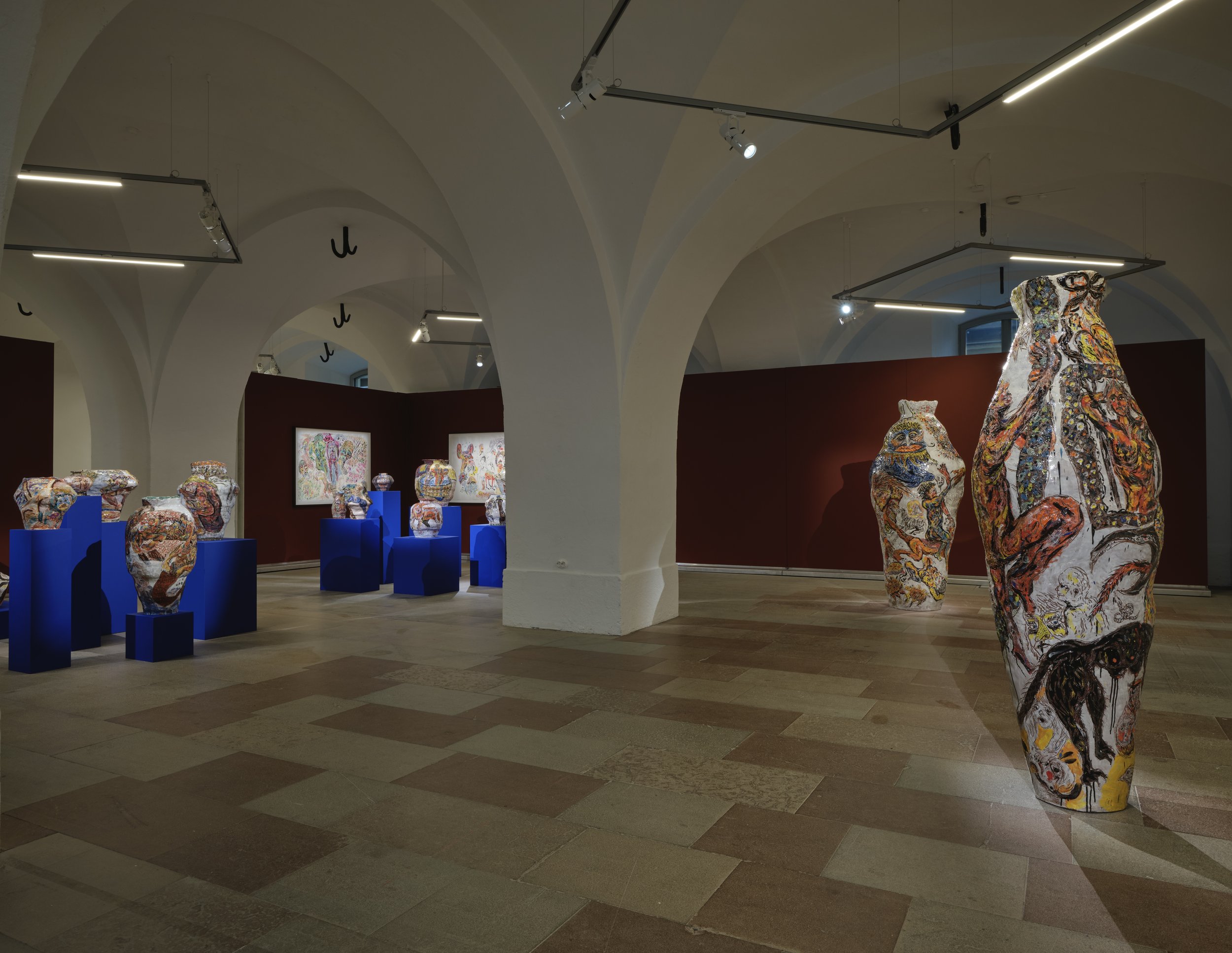
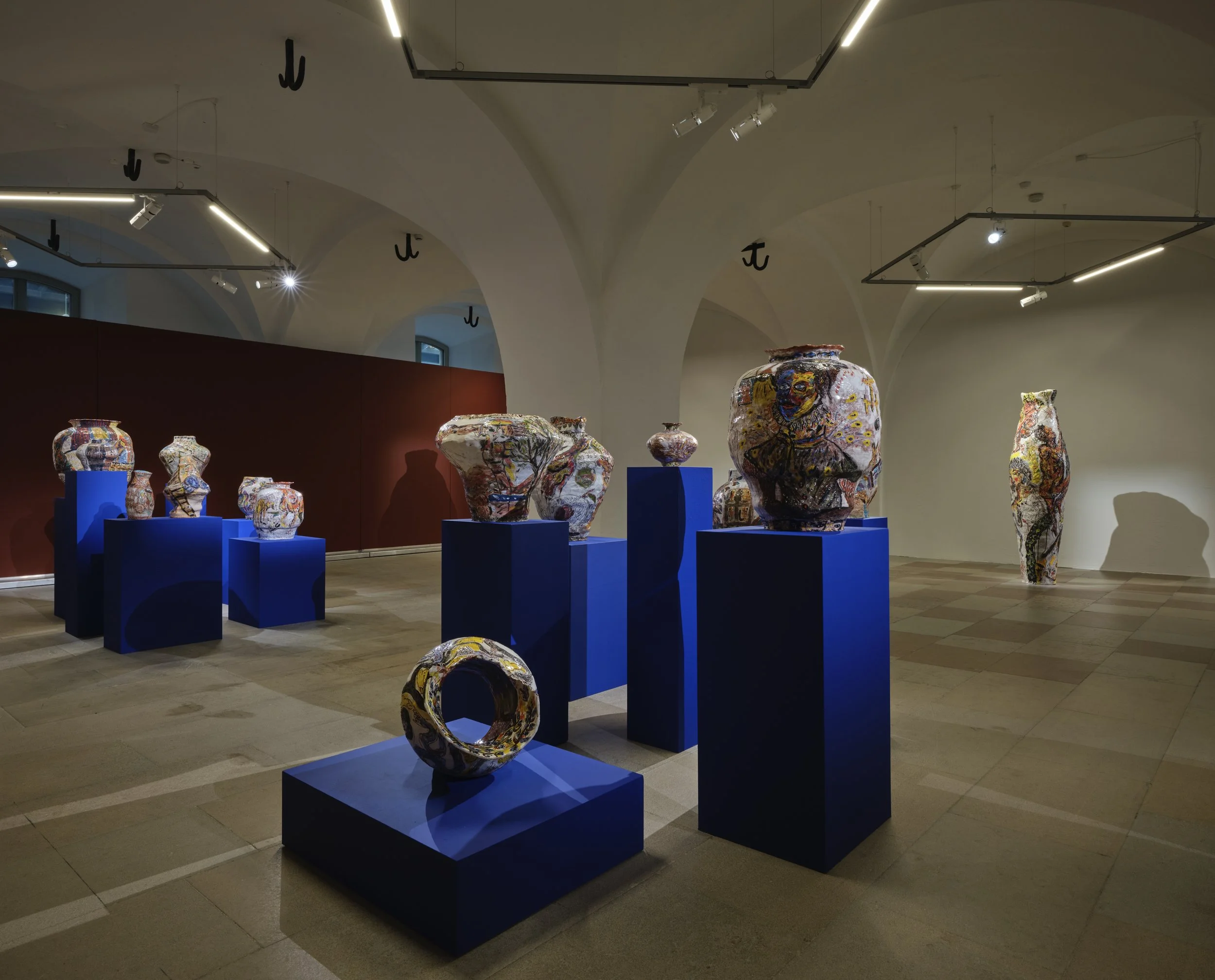
In Deep Cuts, the ancient meets the contemporary. Ceramic clay carries an ancestral memory of earth and body, which in Boumjimar’s hands seems to breathe again. Mythological bodies resurface beneath the pulsating lights of the club; glazes become skin; movement becomes ritual. Here, the most enduring of materials intersects with the most mutable of subjects: humanity itself. Titles such as Elysian Dolls, Dionysian Demon, and Erect Labyrinth evoke classical imagery, while Breathe, Cruising Swamp, and Restored River engage with human and ecological concerns. Across these works run the “deep cuts,” both thematic and physical, giving the exhibition its layered title.
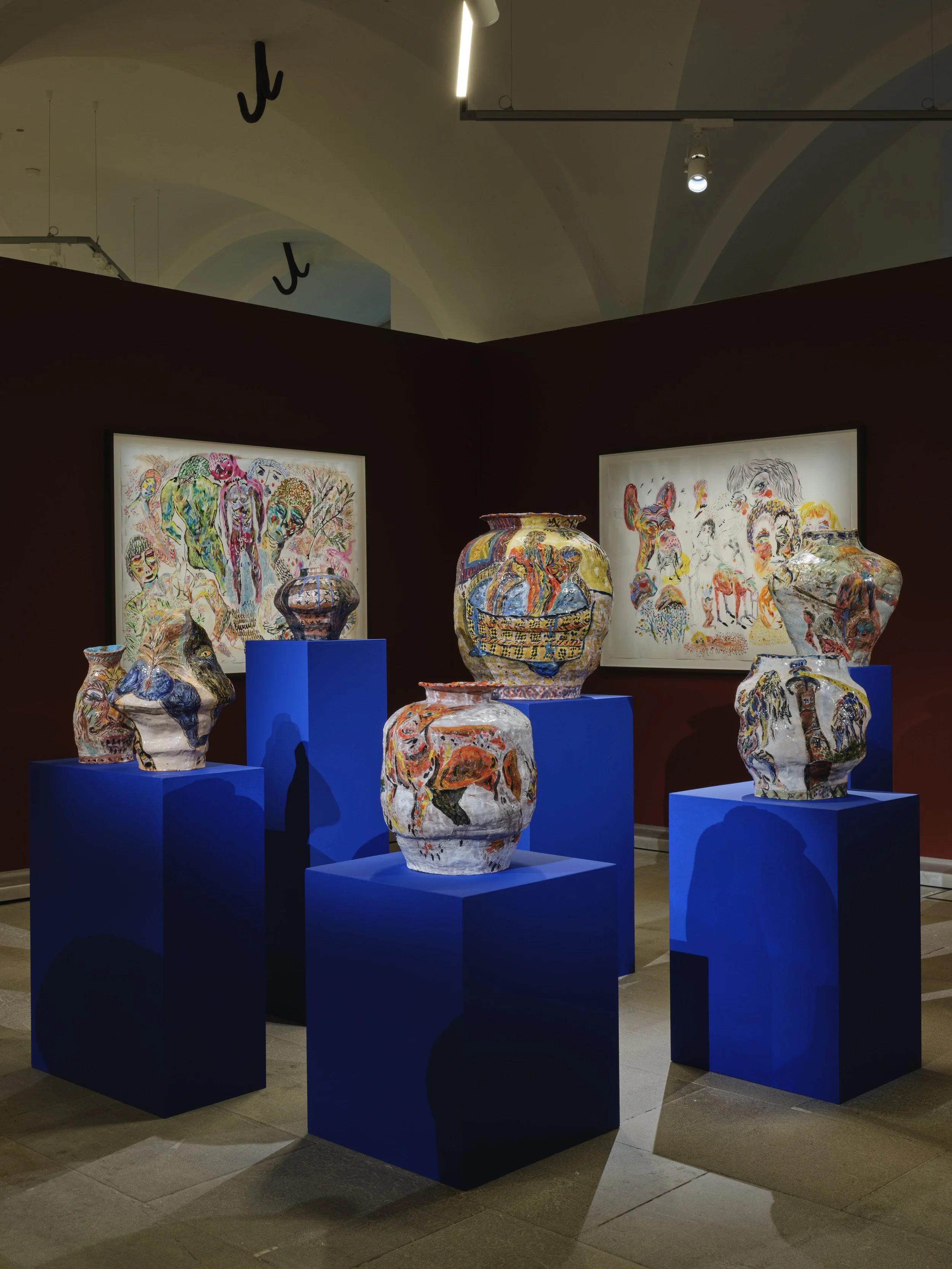
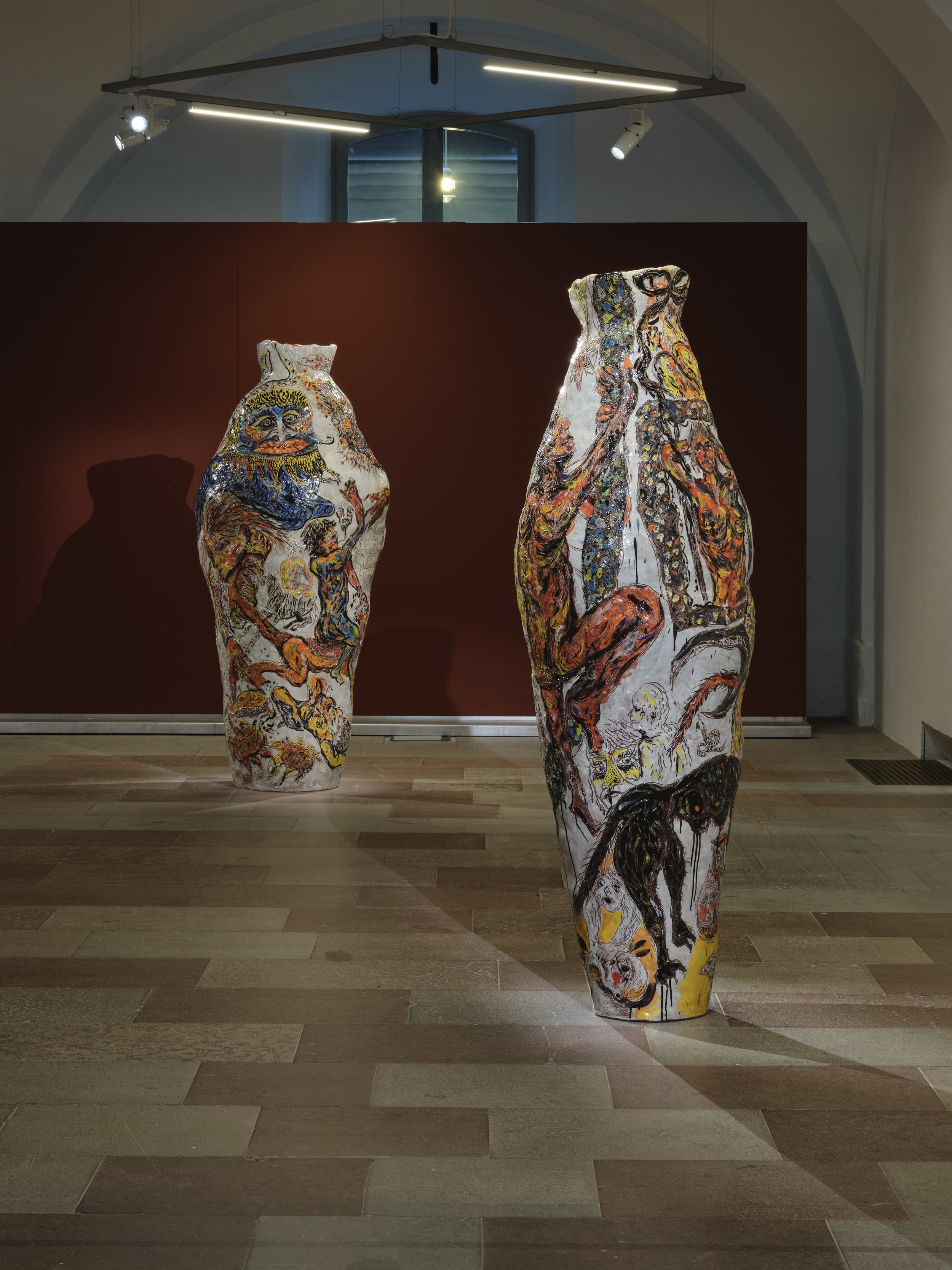
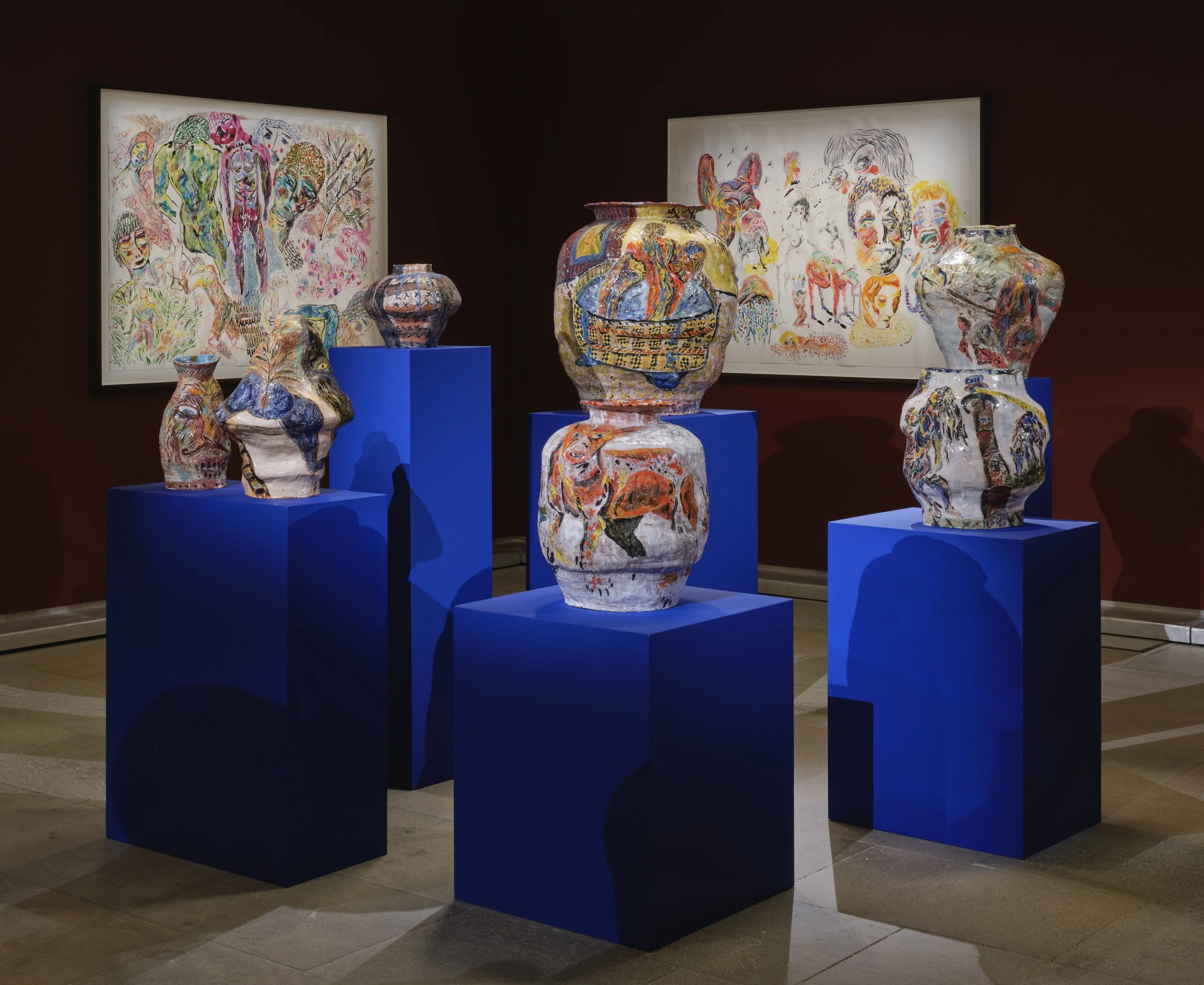
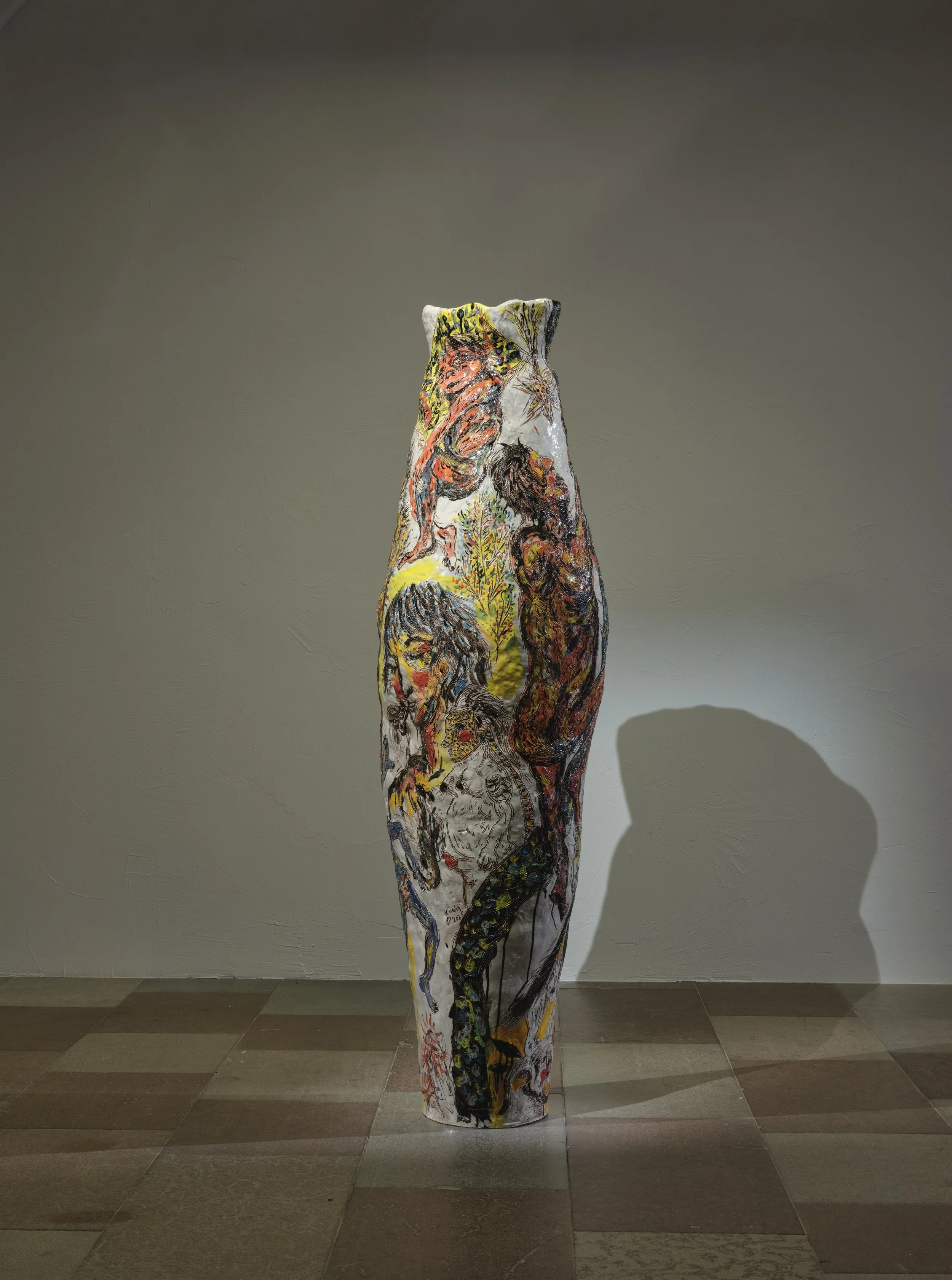
Drawings and vases, some monumental in scale, form the core of the installation. Yet all Boumjimar’s works possess a sense of magnitude, both in form and expression: they are syntheses of memory, imagination, and lived experience, coalescing into potent visual motifs. Through his expressive and distinctive language, Boumjimar stages dramatic encounters between nature, desire, and the body.
The world he presents is populated by an eclectic array of figures – from sphinxes and serpents to pharaohs and the demons of the dancefloor. His works function as both containers and stages: sites where figures emerge, merge, and vanish in an organic cycle. Whereas ancient vases recounted the deeds of gods and heroes, Boumjimar’s images capture bodies dancing at dawn, the secret life of nocturnal parks, and humans lingering in nature. Here, the archaeological vessel meets the collective anonymity of the contemporary club scene.
At its heart, this is an exploration of the potential of body and material, establishing a dialogue between the physical, historical, and social realms. Boumjimar challenges entrenched hierarchies and interrogates the interplay between nature, culture, and identity. His inquiry embraces both personal experience and a perception of the world from a symbiotic, non-human perspective, fostering solidarity between bodies and ecosystems. Clay, glaze, and pigment serve as narrative instruments, extending the body into material form. This physical mediation conveys energy, emotion, and thought, imbuing the works with intensity and fragility that mirrors the complexities of human existence: strength and vulnerability, order and chaos.
Remarkably, Boumjimar does not rely on convoluted conceptualism. Deep Cuts may instead be understood as an organic constellation, animated by memory, lived experience, and impression. His performative practice infuses the sculptures and suffuses the paintings. We encounter nightlife, the motif beloved by the Impressionists, not literally, but metaphorically, to convey another kind of world: first, the queer club scene, but also any idealised, imaginative space. The crucial point is that it is ideal.
It is rare to witness an artist attempt to depict a club environment in which all are accepted, a temple of collective belonging – one for all, all for one. A bastion of equality in which participants are children of nature, inhabiting the immediacy of experience: nameless, classless, and suffused with communal euphoria. Here, there are no riddles; the works offer themselves fully. The depiction of experience, imaginary or otherwise, is the subject itself.
Deep Cuts functions as a catalyst, combining historical and mythological references with contemporary social codes, manifesting queer identity and the ritualised rhythms of urban nightlife. Each gesture shapes the way the works are perceived. Themes of fluid identity and the aesthetics of experience – bodies in parks, gardens, and clubs – invite reflection on community, freedom, and transgressive expression. Boumjimar’s works illuminate marginalisation and critique heteronormative structures that perpetuate both social and ecological harm. He bridges past and present, staging a dialogue in which bodily experience oscillates between antiquity and modernity, technique and concept, ritual and play.
Deep Cuts may thus be read as a mythologisation of the contemporary. The bucolic state is not found in spring meadows but in the lived reality of the modern human, where body and landscape are inseparable. Arcadia becomes a microcosm, translating the concept of biodiversity into flows of social and identity relations. Humans, animals, and plants participate in a shared choreography in which nature is a medium for ongoing metamorphosis. Boumjimar’s Elysian fields function as a darkroom, where the Dionysian demon assumes the guise of a ludic faun.
As in nature, variation flourishes when conformity is dissolved, and diversity is nurtured. Identities cross-pollinate as bodies dance on equal terms, liberated from hierarchical hegemony and the stifling constraints of routine. The vases act as corporeal stages, a tangible counterpart to ephemeral performance. They preserve movement, interaction, and the dynamics of the choreographed body in a frozen gesture, as it were. The performative dimension bears the imprint of Boumjimar’s work with the Young Boy Dancing Group, where physical presence and collective motion are central. By transferring movement into material form, the works are not merely depictions of bodies but records of bodily labour. The viewer witnesses action rather than image.
Clay becomes a contemporary kykeon – the ritual drink that opened participants’ minds to the cycles of life and death in the Eleusinian mysteries. Boumjimar’s work is both material and allegorical: a medium of transformation. Flowing watercolour and oil pastels conjure organic landscapes where humans and nature interweave, faces emerging from foliage, bodies entwined with tree trunks and animals. His practice articulates an ecological sensualism, a world in which all beings share a common rhythm. Boumjimar portrays a society structured by norms, yet inhabited by bodies whose biological and social diversity constantly transcends them, describing his work as a commentary on “a society polluted by norms.”
The large-scale paintings are labyrinthine narratives. Motifs are continuously reconfigured: from Pharaohs and Napoleons in History to underwater encounters in Cruising Swamp II and interlaced bodies in The Garden. Subtle echoes of societal norms fade into imperceptible traces. Works such as Saying the Wrong Thing at the Dinner Table capture the humour of social misadventure. Here, norms and morals take corporeal form, compelling subjects to navigate a world where decorum is perpetually tested. Colour is intense, bodies expressive, and history, identity, and society converge in poetic grandeur.
Transformation and intermingling are constant leitmotifs. Humans, animals, plants, and bodies move in tandem. This is an existential stance rather than a formal device. In an era in which identity is often conceived as fixed, Boumjimar champions the fluid, ephemeral, and composite. Echoes of Ovid’s Metamorphoses resonate, alongside the modernists’ desire to let matter speak. In Life Goes On, idea and form converge. Vivid colours contrast with the neutral texture of clay, bodies drawn into one another, consumed, and reborn in new formations. The title is succinct yet fitting: life continues, but never in the same form.
Ceramics, seemingly archaic, becomes in Boumjimar’s hands a tool for contemporary analysis. In a digital age that threatens to dissolve tactility, he returns art to the hand, to movement, to the rhythm inherent in matter itself. Perhaps this is where his work finds its unique voice: in its capacity to articulate a rare vision of symbiosis between humans, between species, between substance and meaning. The composite, mutable clay, suffused with prehistoric memory, becomes the perfect metaphor. Karim Boumjimar reminds us that we are all children of clay – malleable, ephemeral, and infinitely capable of metamorphosis.
Marcel Engdahl